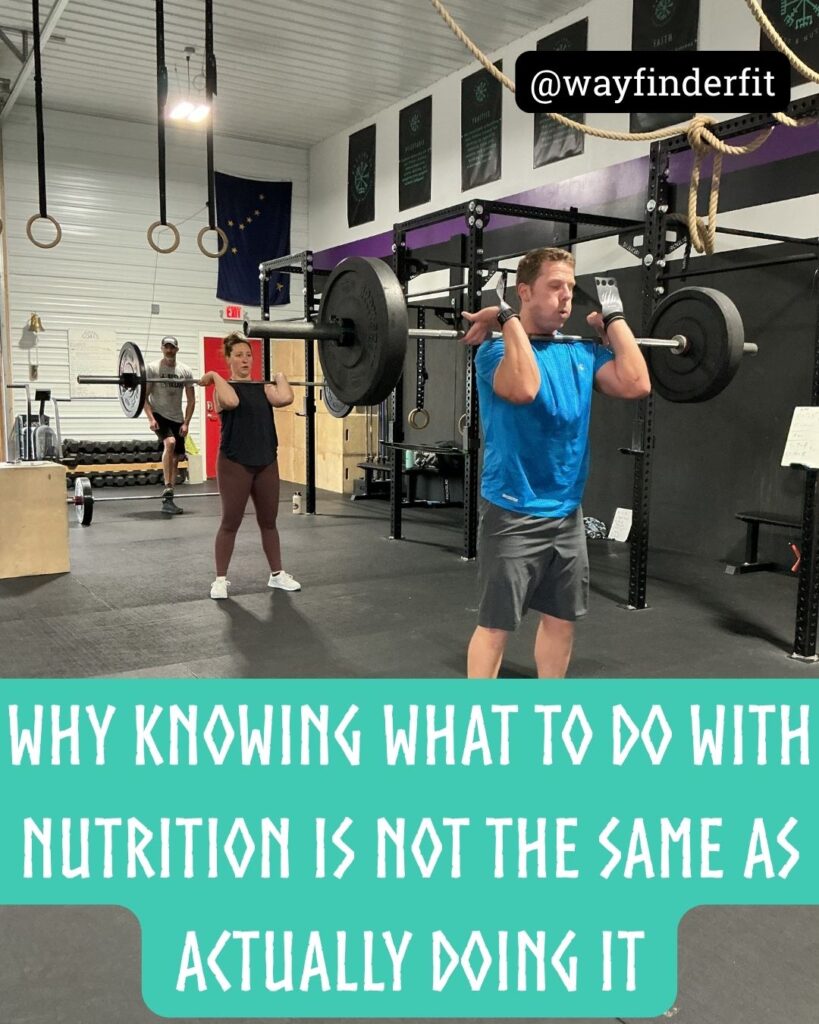
A lot of adults already know the basics.
Eat more protein.
Drink more water.
Plan meals better.
Stop snacking mindlessly.
Be more consistent.
Eat less junk.
Get more fruits and vegetables.
That information is not exactly hidden.
And yet, plenty of people still feel stuck.
They say things like:
“I know what to do, I just don’t do it.”
“I can do well for a few days, then I fall off.”
“I understand nutrition, I just can’t stay consistent.”
“I get bored.”
“I start over every Monday.”
That gap between knowing and doing is where a lot of frustration lives.
It is also where a lot of nutrition advice falls apart.
Because most adults do not need another lecture on what healthy food is.
They need help turning knowledge into habits.
For adults in Palmer, Alaska and across the Mat-Su Valley, especially busy parents trying to manage work, kids, summer schedules, and real life, that matters a lot.
Nutrition is rarely just about information.
More often, it is about behavior.
And behavior needs better systems, better support, and a better fit.
Information Is Cheap. Follow-Through Is Hard.
We live in a world overflowing with nutrition information.
Everyone has a list.
Everyone has a rule.
Everyone has a “better way.”
Low carb.
High protein.
Count macros.
Do not count anything.
Cut sugar.
Track everything.
Do not eat after 7.
Fast longer.
Eat cleaner.
Stop snacking.
Only shop the perimeter.
There is no shortage of advice.
That is one reason a lot of adults feel almost embarrassed when they struggle.
They think:
“If I already know this stuff, why can’t I just do it?”
Because knowledge is not the same thing as execution.
That is true in business.
It is true in parenting.
It is true in fitness.
It is definitely true in nutrition.
Knowing what to do is helpful.
Doing it when life gets busy, stress gets high, and routine gets messy is a different challenge.
That is why nutrition coaching matters.
Most Adults Are Not Failing From Lack of Discipline
They are struggling with friction.
This is one of the most useful ideas from Atomic Habits and one of the clearest lenses to apply to nutrition.
People often assume their problem is motivation or discipline.
A lot of the time, it is actually friction.
If the healthy choice is:
- harder to prepare
- less convenient
- less satisfying
- poorly planned
- disconnected from real life
…it becomes much less likely to happen consistently.
That does not mean someone is weak.
It means the system around the behavior is not strong enough yet.
This is one reason adults can be very successful in other parts of life and still feel stuck around food.
They are not lazy.
They are overloaded.
And overloaded people rarely need more criticism.
They need better systems.
Nutrition Usually Breaks Down in the Same Predictable Places
A lot of adults do not struggle with every meal.
They struggle in patterns.
That is important.
Because once you start identifying patterns, food stops feeling random.
Common breakdown points look like:
- breakfast is too light, so energy crashes later
- lunch is rushed, so convenience wins
- the afternoon gets stressful, so snacking spikes
- dinner becomes “whatever is easiest”
- weekends lose structure
- one off-plan meal turns into a whole off-plan stretch
That matters because it changes the question.
Instead of asking:
“Why am I bad at this?”
A better question becomes:
“Where does this usually come apart?”
That is a much more coachable problem.
And that is one of the real values of nutrition coaching.
A good coach helps someone spot the pattern, not just feel guilty about the outcome.
“I Know What to Do” Often Means “I Don’t Have a System”
This is one of the most common things people say:
“I know what to do, I just don’t do it.”
Most of the time, what they really mean is:
- I do not have enough accountability
- I do not have enough structure
- I make decisions too late
- I rely on motivation too much
- my environment is not helping me
- my routine falls apart under stress
- I have not built this into real life yet
That is a very different problem than “I need more nutrition facts.”
A system sounds like:
- protein-first breakfast
- groceries bought with a purpose
- lunch decided before hunger hits
- a few reliable meal anchors during the week
- a plan for weekends
- support when things start slipping
That is why coaching helps.
It turns vague intentions into repeatable actions.
Boredom Is a Bigger Problem Than People Admit
One of the objections you mentioned is:
“It’s boring.”
That is real.
And it matters more than some coaches want to admit.
A lot of nutrition advice becomes boring because it treats food like a compliance test.
Eat the same meals.
Avoid anything “bad.”
Do not enjoy it too much.
Stay in control.
Try not to mess up.
That approach usually creates one of two outcomes:
- short-term discipline
- long-term resentment
Neither is the goal.
Good nutrition should support life.
It should help someone feel:
- better
- steadier
- more energized
- less reactive around food
- less trapped in all-or-nothing thinking
It should not make someone dread every meal.
This is one reason Precision Nutrition-style coaching is so useful.
It is not built on shaming people into a narrow food list.
It is built on:
- habit change
- awareness
- experimentation
- realistic progress
- helping people understand how food affects how they feel
That is much more sustainable.
And much less boring.
Food Is Not Just Fuel. It Is Feedback.
One of the most useful shifts adults can make is moving from:
“What am I allowed to eat?”
to
“How do I actually feel when I eat this way?”
That changes the whole conversation.
Because once food becomes feedback, the goal is not perfection.
The goal is awareness.
Questions like:
- What keeps me full longer?
- What helps my energy stay more stable?
- What meals make afternoons easier?
- What foods leave me sluggish?
- What patterns tend to lead to overeating?
- What works in real life for me?
That is where coaching becomes personal.
At Wayfinder, nutrition coaching is not about forcing everyone into the same rules.
It is about helping people understand their own patterns and build stronger habits around them.
That is a very different experience than trying to “be good” on your own.
This Is Why Nutrition Coaching Matters
A good nutrition coach does more than hand out advice.
They help someone:
- notice patterns
- reduce friction
- build habits gradually
- recover quicker from imperfect days
- create more consistency without obsession
- stop starting over all the time
That matters because a lot of adults are not missing motivation.
They are missing support.
That is exactly why I’m excited to highlight Kerstin Youngs and Wayfinder’s nutrition coaching this month.
Kerstin brings a strong mix of:
- education
- evidence-based practice
- strength and conditioning knowledge
- Precision Nutrition coaching principles
- long-term, sustainable body recomposition focus
Her coaching is virtual and practical:
- StreamFit messaging
- Loom video support
- habit coaching first
- macros available if that method makes sense for the client
That setup is valuable because it fits real life.
It gives adults support without forcing them into a rigid, all-consuming system.
Summer Usually Exposes Weak Food Habits
June is actually one of the best times to talk about this.
Because summer reveals a lot.
Schedules change.
School gets out.
Travel picks up.
Weekends get fuller.
Routine gets softer.
Food gets more social.
People drift.
That does not mean summer is the enemy.
It just means weak habits get exposed faster when structure disappears.
That is one reason a lot of adults say they want a “healthier summer.”
Not a more restrictive summer.
A healthier one.
More energy.
Better habits.
Less drift.
Less all-or-nothing eating.
More consistency without obsession.
That is a strong goal.
And coaching can help people get there.
Nutrition Coaching Helps People Stop Starting Over
This may be one of the biggest benefits of coaching.
Instead of reacting to every rough day with:
“I blew it,”
the conversation becomes:
- what happened?
- what pattern showed up?
- what made the decision harder?
- what support would help next time?
- what is the next right move?
That is coaching.
And that is how adults stop turning one imperfect meal into a lost week.
This also connects directly to the Atomic Habits idea of identity.
Someone does not become “a healthy eater” because they have one perfect streak.
They become that person by repeating:
- better decisions
- stronger recovery after setbacks
- more honest reflection
- more useful habits
- less drama around food
That identity is built gradually.
And coaching helps reinforce it.
This Matters Even for People Who Already Work Out
A lot of adults assume that if they are exercising consistently, food should just sort itself out.
Sometimes it does.
Often, it doesn’t.
Someone can be:
- training hard
- showing up to class
- trying to do the right things
…and still feel like nutrition is the part that keeps slipping.
That is not unusual.
Workouts and food play different roles.
Training helps with:
- strength
- capacity
- resilience
- confidence
Nutrition affects:
- energy
- recovery
- satiety
- body composition
- consistency
- day-to-day function
That is why nutrition coaching matters even for someone who is already “doing the gym part.”
The missing piece is not always more exercise.
Sometimes it is better food habits.
Final Thoughts
If you keep saying:
“I know what to do, I just don’t do it,”
there is a good chance the problem is not information.
There is a good chance the problem is that you are trying to rely on willpower where you actually need:
- structure
- support
- accountability
- better systems
- more realistic habits
And if nutrition has started feeling boring, exhausting, or too easy to abandon, that is not proof that you do not care.
It is usually a sign the plan is not built for your real life.
That is what coaching is for.
At Wayfinder, we want a healthier summer without restriction.
We want stronger habits that support the life people actually want.
We want adults in Palmer and the Mat-Su Valley to stop feeling like food is something they are always failing at.
If you want to talk about nutrition coaching, the best first step is a No Sweat Intro:
https://go.streamfit.com/calendar/nsi
Or email Kerstin directly here:
kerstinyoungs@gmail.com
FAQ Section
Why do I know what to do with nutrition but still not follow through?
Because knowledge alone is rarely enough. Most adults need support, accountability, and habits that fit real life.
Is nutrition coaching just for weight loss?
No. It can help with consistency, energy, recovery, body composition, and building a healthier relationship with food.
What if healthy eating feels boring?
That usually means the plan is too rigid or too disconnected from real life. Good coaching should make nutrition more sustainable, not more miserable.
Is Wayfinder’s nutrition coaching all macros?
No. Kerstin uses PN-style habit coaching first, with macros available if the client wants that route.
How does nutrition coaching work at Wayfinder?
It is virtual, using StreamFit messaging, Loom video support, and personalized coaching.
How do I get started?
Book a No Sweat Intro here:
https://go.streamfit.com/calendar/nsi
Or email Kerstin directly:
kerstinyoungs@gmail.com