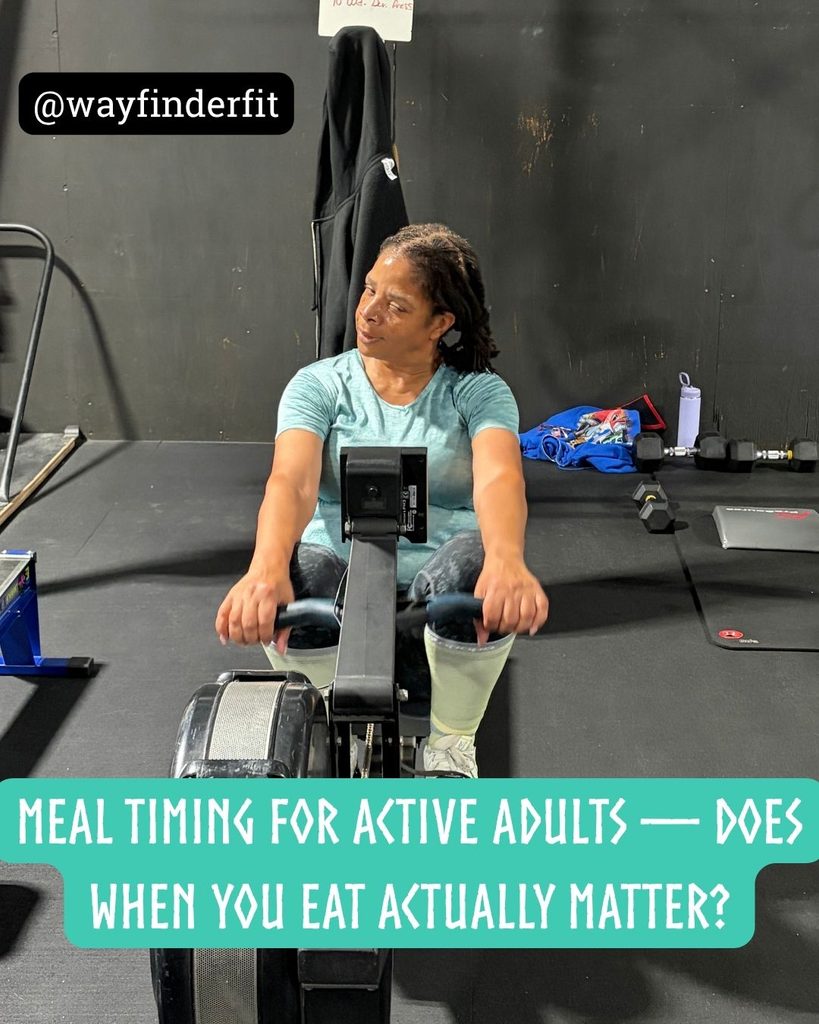
Most nutrition conversations focus entirely on what to eat. And that’s the right place to start — food quality and overall intake are foundational.
But there’s a second variable that gets far less attention and makes a meaningful difference for people who train consistently: when you eat.
This isn’t about rigid meal schedules or eating every two hours. It’s about a few practical timing principles that affect your energy going into workouts, your recovery coming out of them, and the way your nutrition holds up across a full day.
Why Timing Matters for Active Adults Specifically
For sedentary adults, meal timing matters less. When you’re not regularly stressing your muscles and asking them to recover and adapt, the distribution of food across the day has a smaller impact on outcomes.
But when you’re training three, four, or five times per week — your body has specific demands at specific times. Fuel going in before effort. Raw materials available during the recovery window after. Consistent intake across the day to keep blood sugar stable and prevent the reactive eating that tends to happen when meals are skipped or too far apart.
None of this needs to be complicated. It comes down to a handful of practical habits.
Before Your Workout
The goal before training is to have enough fuel available to perform well without feeling heavy or uncomfortable during the session.
For most people training in the morning: a small, easily digestible meal 30 to 60 minutes beforehand works well. Something with carbohydrates for quick fuel and a modest amount of protein — a banana and Greek yogurt, toast with eggs, oatmeal with a scoop of protein. Not a full breakfast. Enough to take the edge off empty and give your body something to work with.
For people training in the afternoon or evening: you’re usually coming off one or two meals, so your pre-workout fuel needs are lower. The bigger priority is making sure those earlier meals were adequate — that you didn’t skip lunch and show up to a 5pm class running on nothing since breakfast.
If you train fasted and feel fine doing it — that’s a legitimate approach for some people. But if your workouts feel flat, heavy, or you’re fading in the back half, the first thing to experiment with is a small amount of carbohydrate beforehand.
After Your Workout
The post-workout window is real, but it’s been overstated in fitness culture. You don’t need to chug a protein shake the moment you walk out of the gym. What you do need is a protein-forward meal within a couple of hours of finishing your session.
Here’s why: the training stimulus creates microscopic damage to muscle tissue. Your body repairs and rebuilds that tissue stronger than before — but only if it has the raw materials to do so. Protein provides those raw materials. Carbohydrates help replenish glycogen and support the recovery process.
A practical post-workout meal: a palm-sized portion of protein (chicken, ground beef, eggs, fish, Greek yogurt, cottage cheese) alongside carbohydrates (rice, potatoes, oats, fruit) and vegetables if you have them. It doesn’t need to be elaborate. It needs to happen within a reasonable window.
Where people go wrong: they finish a workout, don’t eat for three or four hours because they’re busy or not hungry, and then wonder why recovery is slow and the next day’s workout feels harder than it should. The workout creates the demand. The meal after it is where recovery actually starts.
Across the Day
Beyond pre- and post-workout nutrition, the most impactful meal timing habit for most active adults is simply: don’t skip meals.
Skipping meals — usually breakfast or lunch — creates a deficit that the body tries to compensate for later. And later compensation almost always looks like reactive eating: larger portions, higher-calorie foods, and choices made when you’re too hungry to make deliberate decisions.
Three reasonably spaced meals anchored by protein keeps blood sugar more stable across the day, reduces the severity of hunger signals, and makes the evening meal easier to keep proportionate. It also means you’re fueling your body consistently rather than in one or two large loads that it has to process all at once.
For people with busy mornings: breakfast doesn’t have to be elaborate. Greek yogurt and fruit. Eggs scrambled in five minutes. A protein shake if that’s what fits. The goal is to eat something with protein within an hour of waking. The habit matters more than the meal.
What About Intermittent Fasting?
Intermittent fasting works for some people and doesn’t for others. If you’re training consistently and regularly, compressing your eating into a short window makes meeting your protein needs significantly harder. Most active adults already struggle to eat enough protein in a normal eating window — shrinking it makes that gap larger.
If you’re currently doing intermittent fasting and your training feels good and your energy is stable — it’s working for you. Don’t change it on the basis of this post. But if your performance feels flat, recovery is slow, and you’re finding it hard to hit adequate protein, the eating window is worth examining.
Putting It Together
A few practical anchors: eat something with protein within an hour of waking. Don’t skip lunch, especially on training days. Have a protein-forward meal within a couple of hours after your workout. Don’t let dinner be the first real meal of the day.
These aren’t rules that require a perfect schedule. They’re guidelines that, applied most days, make a real difference in how you feel, perform, and recover.
If you want to talk through how to apply any of this to your specific schedule — that’s exactly what a free No Sweat Intro is for.
Book here → https://go.streamfit.com/calendar/nsi
FAQ SECTION:
Does meal timing actually matter for fitness? Yes, especially for active adults training regularly. Eating before workouts provides fuel for performance, eating after provides the protein needed for recovery, and consistent meals throughout the day keep energy stable and reduce reactive eating.
What should I eat before a workout? A small, easily digestible meal with carbohydrates and some protein 30 to 60 minutes beforehand works well for most people — Greek yogurt with fruit, toast with eggs, or oatmeal with protein. For afternoon training, focus on making sure earlier meals were adequate.
How soon after a workout should I eat? Within a couple of hours is a reasonable target. A protein-forward meal with some carbohydrates — chicken and rice, eggs and potatoes, Greek yogurt and fruit — gives your body the raw materials it needs to start repairing and rebuilding.
Does Wayfinder Fitness offer nutrition coaching in Palmer AK? Yes. Wayfinder Fitness & Nutrition in Palmer offers nutrition coaching through Kerstin Youngs alongside group classes, personal training, and small group training. Book a free No Sweat Intro at https://go.streamfit.com/calendar/nsi.
What We Offer: https://wayfinderfit.com/what-our-gym-wayfinder-fitness-offers/
Book a No Sweat Intro: https://go.streamfit.com/calendar/nsi