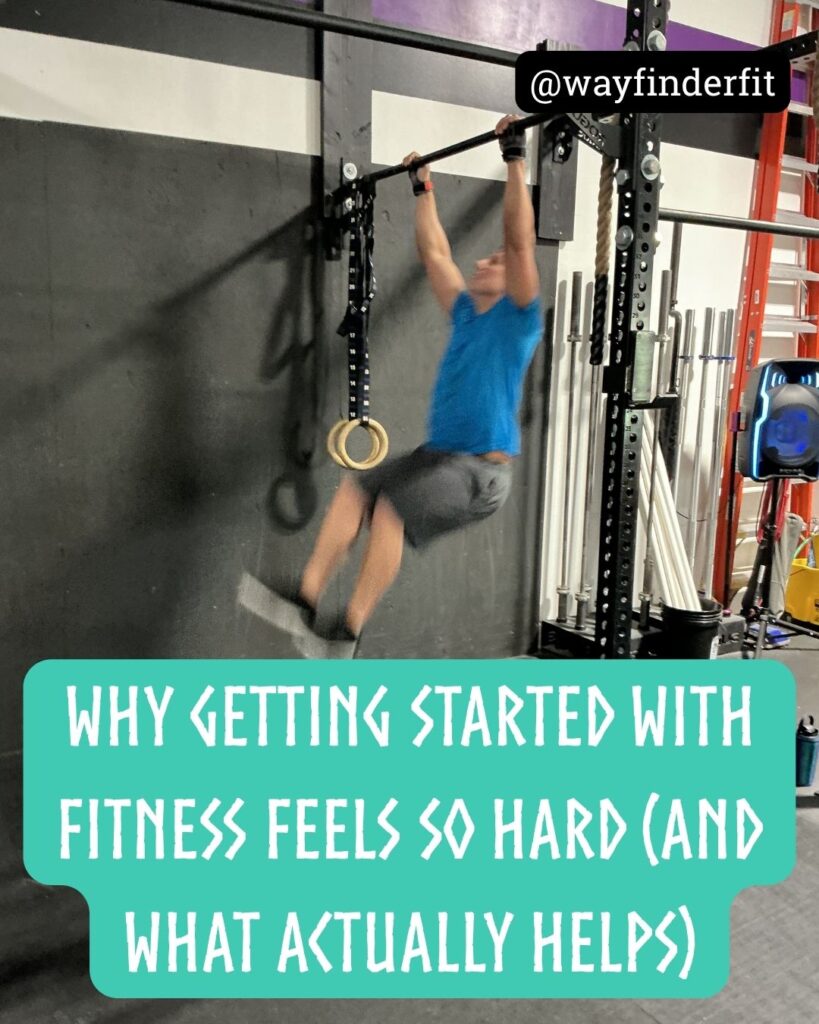
A lot of adults are not stuck because they do not care about their health.
They are stuck because starting feels harder than it should.
That matters.
Because when a first step feels too hard, people delay it.
And when people delay it long enough, they start building a story around why they “just can’t” get going.
That story usually sounds like:
- I need to get in shape first
- I do not have time
- I am too out of routine
- I do not know what to do
- I do not want to look stupid
- I have failed before
Those thoughts are common.
They are also one of the biggest reasons adults stay stuck longer than they need to.
For adults in Palmer, Alaska and across the Mat-Su Valley, this challenge is especially real.
Life gets busy.
Weather shifts.
Schedules change.
Kids’ activities pile up.
Energy drops.
Spring hits and routine gets weird again.
The answer is not more guilt.
The answer is understanding why starting feels hard — and then removing as much friction as possible.
The First Step Carries More Emotional Weight Than People Realize
The beginning is rarely just logistical.
It is emotional.
A lot of adults are not simply deciding whether to work out.
They are deciding whether to:
- be seen trying
- face something they feel behind in
- risk feeling embarrassed
- confront how far off track they feel
- trust that this time might be different
That is a lot of pressure to put on one first step.
This is one reason people who are smart, responsible, and capable in every other area of life can still freeze when it comes to fitness.
It is not because they are weak.
It is because the beginning feels personal.
Most People Think They Need More Motivation
They usually do not.
Most people already know they should move more, eat better, sleep more, and take care of themselves.
The issue is not a lack of awareness.
The issue is friction.
James Clear talks about this really well in Atomic Habits.
The harder a behavior feels to begin, the less likely it is to happen consistently.
That means if the start of fitness feels like:
- too much information
- too much intensity
- too much pressure
- too much uncertainty
Then people hesitate.
A lot.
So the better question is not:
“How do we make people want it more?”
The better question is:
“How do we make the first step feel safer, clearer, and easier to repeat?”
That is a much more useful question.
What Usually Makes Starting Harder
A few things tend to get in the way repeatedly.
1. All-or-Nothing Thinking
A lot of adults assume that if they are going to start, they need to go all in.
That usually sounds like:
- meal prep everything
- work out five days a week
- cut out all the “bad” food
- get super disciplined overnight
That approach creates too much pressure too quickly.
It turns one first step into a full identity crisis.
And when life interrupts — which it always does — the whole thing collapses.
2. Intimidation
This is real.
A lot of adults are not afraid of hard work.
They are afraid of looking out of place.
They are afraid of being the least fit person in the room.
They are afraid of not knowing the movements.
They are afraid of being judged.
That fear keeps more people out of gyms than most coaches want to admit.
3. Lack of Structure
A vague plan is easy to ignore.
If someone’s plan is “I should probably work out more,” it usually does not survive a busy schedule.
People do better when the next step is clear.
Not:
“Get healthier.”
More like:
- book the conversation
- come to class Tuesday at 5:30
- eat protein at breakfast tomorrow
- go for a 10-minute walk tonight
Clarity reduces friction.
4. Past Failure
A lot of adults have tried before.
They have done challenges.
They have joined gyms.
They have started routines.
They have fallen off.
That history creates hesitation.
People start protecting themselves from disappointment by never fully starting again.
That is understandable.
It is also why the right first step matters so much.
What Actually Helps
If starting feels hard, the answer is not making the plan bigger.
The answer is making the first step better.
1. Start With a Conversation
This is one reason we use a No Sweat Intro at Wayfinder Fitness & Nutrition.
People do not need to prove themselves first.
They need:
- a conversation
- a clear next step
- a coach who can help them sort through goals, obstacles, and where to start
That is a very different entry point than “show up and survive.”
It removes a lot of emotional weight from the beginning.
2. Lower Friction
A better first step should feel doable.
Not easy in the lazy sense.
Manageable in the honest sense.
That might mean:
- committing to two sessions per week instead of five
- focusing on protein first instead of overhauling every meal
- going to bed earlier instead of trying to “fix everything”
- walking daily instead of waiting for a perfect workout week
People build momentum when they can succeed at the first step.
3. Build Identity Slowly
This is where the Atomic Habits idea matters so much.
You do not become a healthy person in one big decision.
You become a healthy person by collecting evidence.
One workout.
One better meal.
One return after a missed day.
One week where you followed through.
That evidence starts changing the story:
- “I never stick with things” becomes “I am getting more consistent”
- “I am out of shape” becomes “I am someone who trains”
- “I always fall off” becomes “I come back quicker now”
That is powerful.
4. Get Coached
Most adults do not need more fitness information.
They need coaching.
They need:
- someone to reduce confusion
- someone to scale appropriately
- someone to help them progress safely
- someone to make sure the plan actually fits their life
That is especially important for the people we serve most:
- moms and dads
- busy professionals
- adults restarting after time away
- older adults who want to stay strong and independent
Those people do not need chaos.
They need support.
Why the Environment Matters
Environment changes behavior.
That is not a theory. It is something you can see.
If a gym feels intimidating, people avoid it.
If the room feels welcoming, people relax faster.
If coaches are present and supportive, people ask more questions.
If the class is structured and scalable, people feel safer taking a first step.
That is one reason Bring a Friend Week can be so powerful.
Sometimes a good first experience is what changes the whole story.
Not because one workout changes a life.
Because it changes what feels possible.
What We Care About at Wayfinder
At Wayfinder Fitness & Nutrition, we care a lot about the beginning.
Not just because new people matter.
Because beginnings matter.
They shape everything that follows.
We do not expect people to arrive already fit.
We do not expect people to know what they are doing.
We do not expect people to be confident before they walk in.
We expect them to start where they are.
That is a big part of who we are as a gym.
We help everyday people build strength, confidence, and health that fit real life.
That includes:
- moms and dads who want to keep up with their kids
- adults who want more energy
- people who want coaching instead of confusion
- older adults who want to stay capable
- teens who need strong environments and good role models
That is who we serve.
Final Thoughts
If getting started has felt harder than it should, there is probably a reason.
Usually, it is not because you do not care enough.
It is because the first step has too much friction attached to it.
A better first step changes everything.
More clarity.
Less pressure.
Better coaching.
A more supportive environment.
A process you can trust.
That is what actually helps.
If you are in Palmer or the Mat-Su Valley and you have been thinking about getting back into a healthier routine, let’s start with a conversation.
Book a No Sweat Intro here:
https://go.streamfit.com/calendar/nsi
link Wayfinder Fitness & Nutrition to: https://wayfinderfit.com/
link what we offer to: https://wayfinderfit.com/what-our-gym-wayfinder-fitness-offers/